Showing posts with label Pregnancy amp; Birth. Show all posts

Sunday, 17 November 2013

The 7 Baby B’s


Last week Peaches Geldof was on 'This Morning' discussing her parenting choices. In the debate she mentioned the 7 Baby B’s which originated from the Baby Books by Dr William Sears and his wife Martha Sears  as an easy to remember guide for people who want to know more about, or practice Attachment Parenting.  Hearing her mention it reminded me of what a good starting point the 7 B’s is as it was something that I referred to when Maya was a baby to reassure me that it was ok to follow my instinct when it came to mothering her. However the 7 B’s are not a ‘must do’ list, like Peaches said they are not strict rules, you can pick and choose what you use and you don’t have to do all 7.

The theory of Atachment has been around since Psychoanalyst John Bowly introduced the theory in the 1950’s. Student teachers, counsellors, doctor’s and nurses, plus many others who work in caring professions are taught Attachment Theory. However despite this knowledge being around for so long and being practiced as the norm in most of the world, Attachment Parenting in the West is still not the mainstream way of parenting. I might be biased in thinking that it can hold the key to a sea change in the level of compassion and understanding we have for one another, as I was raised in an attachment style and replicated this with my own 2 children, but I do think that it can have a significantly positive impact on the future of humanity.

So I thought I’d share my interpretation of the 7 Baby B’s as I found them useful and hope you will too and also to give you some useful places to find support for practicing whatever of the B’s you feel inclined to.

1.   Birth bonding


The way your baby is born can have long term implications for your relationship.  Inform yourself about the effect of birth by attending a good class such as one’s from Relaxed Birth and Parenting in Bristol or Katrina Berry in our Stoke Newington store. If you can’t attend a class, or, as well as attending a class, read our Free Relaxation for Pregnancy and childbirth booklet and relaxation download. If I had know 16 years ago what I know now, to maximize my chances of getting the birth I wanted, I would have done a hypnosis course, taken magnesium supplements had a Doula or Independent midwife, as well as attend Dominiques Relaxed Birth classes.  All this is discussed in Dr Sarah Buckley’s book ‘Gentle Birth Gentle Mothering’.   Having a Babymoon is an important part of birth bonding too.

2.  Breastfeeding


Of course we all know that breastmilk is an ideal food for a baby and with the right knowledge and support almost every mother can have a breastfeeding relationship with their baby. Make sure you have professional help on hand should you need it. We recommend April Whincop a International Board of Lacation Consultants trained breastfeeding supporter, also trained with La Leche League. April can offer support on the phone, in person or via Skype. She also offers a fantastic 'prepare for breastfeeding workshop'.  We hold a monthly breastfeedingsupport group in the Stoke Newington Store, details can be found on our Facebook events page. Bottle nursing is a great way to maintain bonding and closeness if not breatfeeding or for anyone else bottle feeding your baby.


 Moby baby carrier 3.   Babywearing


This is the practice of keeping your baby close by using a sling or baby carrier.  Our selection of carriers are carefully chosen to allow you to carry your baby safely and comfortably for as long as you want to in and out of the house. Most are suitable up to toddler age. Of course you don’t need a sling to cuddle and carry your baby but a good one certainly helps to prevent arm and back ache and you can get on and do the things you want to do. When you cuddle another person, both produce oxytocin the love/feel good hormone, according to Sarah Buckly, we need at least 8 cuddles a day to make us feel great. The more skin to skin contact the more oxytocin produced. Baby wearing is a great way for dads to bond. Peaches loves carrying her boys in her organic chocolate Ergobaby carrier. Perhaps hugs are another antidote to depression and feelings of solitude?


4.   Bedding Close to baby


Notice that this doesn’t necessarily mean bed sharing. Close can just mean in the same room or with baby right next to your bed in a specially designed co-sleepers or cots such as the ones we sell from Troll or Little Green Sheep's Snuz Pod.

 5.   Belief in the language value of your baby’s cry


This has 2 meanings, firstly to highlight the dangers of ‘Cry –it-out’ techniques. As mentioned in the This Morning interview, Peaches was right in saying that levels of the stress hormone levels cortisol are increased when a baby is left to ‘self soothe’ and all they learn from the experience is anxiety and separation and they are alone in the world unable to rely on anyone for help.  Secondly, it is possible to learn to understand what your baby wants by interpreting their noises and bodily expressions. See ‘The Blossom Method’. But fundamentally a relaxed at ease mother will be able to tune-in to what her baby knows and will become her own expert.

I also believe that if you don’t respond too our baby when they are little how can you expect them to want to talk to you when they are older? They will have learnt that communication with their primary carer gets them nowhere. I also wonder if the huge levels of depression we have in the west are an outcome of such techniques?

 6.   Beware of baby trainers


No clock watching or listening to advice such as ‘if you don’t introduce solids by 6 months your baby won’t eat properly’ if this were the case at least one of my children would still be on a liquid diet! You are your baby’s expert, and don’t let a well meaning friend, relative or health care professional sway you off your heart centered course.  The best training is to surround yourself with people who are on your wave length. See our links and resources page for online and in-person groups and support.

7.  Balance


I’ve been around AP parents for long enough to see this one come up quite frequently and the advice I have for mums who so totally immerse themselves in mothering is ‘put your oxygen mask on first’. You are no good to anyone if you can’t breath. So make time to do something you love and set up support structures so you can get some time off. Or you might decide that going back to work is just the thing to give you that balance.

More useful info


Heart centered concious choices are core to Born's philosophy. The information we give out in the stores and online reflects this, and makes it easy for you to be heart centered too with your pregnancy, birth and parenting choices.

You can find the Dr Sear’s version of the 7 Baby B’s here and learn more about the practice of Attachment Parenting on his site as well as on Attachment Parenting International .

My  list of links and resources that I have compiled to help you in your parenting journey here.

Buy the brilliant ‘Baby Book’

To find a local UK based Attachment Parenting supprt group


Love

Eva


Friday, 12 July 2013

Birth matters

Birth Matters Amanda RaymentAmanda Rayment introduces her new online training to us and answers the question 'Does birth matter?'

What a great title Eva has offered me as a guest blog. Some people would say 'yes Birth Matters!' Others may say 'no not for me'. As always we could gather evidence for both sides of the coin. As one of the tutors of an Antenatal Teachers Training programme, “Bringing Antenatal Teaching Home”, it would appear Birth does matter in my life. I am happy to have this opportunity to share how birth can be an opportunity to dive deeper into love.

The parent and child relationship offers us the potential to discover true freedom. Imagine for a moment being accepted and welcomed simply for the beauty of who you are. Imagine for a moment offering this gift of love to your child. This is the opportunity or the blessing that is available in every parent and child relationship.

The birth of a child could be called an involuntary action, by this I mean that birth is going to take place. We may not know how or when, or we may know how and when, either way it will occur. I often say life provides. The mother need do nothing, birth will occur. Many times there is a tendency to busy ourselves attending to the details or solving problems. In this busyness and doing it is easy to miss the blessing that is being offered. Our full attention often becomes distracted with the many details.

When parents make contact with this so called involuntary action it is often a very direct experience. I have heard parents say it is a ”very profound experience,” "it opened our hearts”, “it was full on”. It can be as if the mother has to draw upon a wisdom deep within her. Then rest in this existence while a huge physiological process occurs. This can be as profound for the father witnessing the process as the mother directly encountering the process. Sometimes through this experience a yearning arises to discover more of what demands our full attention, more contact with what I am calling 'life provides', more of our true nature.

I have discovered that birth doesn’t need defending or used as a grandiose symbol in our life. Of course we are all free to play in this way and this is neither right nor wrong. To leave birth alone is to loosen the chains, if you like of this enormous symbol in the story of the parent and child relationship. So why do I choose to train women as antenatal teachers?

*Birth can be a sign post to dive deeper in to love.

* Birth can be the catalyst in discovering that all the answers to your questions of responsibility as a parent are resting in your heart and the heart of your child. They share the same source.

*Birth asks of us our full attention, not in the sense of attending to external details. Our full attention is required in trusting our self, in trusting our child .If external circumstances need to be attended to let your heart guide you.

*Birth offers us the opportunity to discover our true nature is not dependent on external circumstances. By this I mean that the way in which we birth either “natural” or “medical” is neither right nor wrong. It is just the form, yes of course we may have preferences. If I go back to my words earlier, imagine being welcomed and accepted simply for the beauty of who we are. Why not let birth just be and focus our full attention on extending and receiving love. Love can both be expressed through a so called “natural birth” and a so called “medical birth”.

So in answer to the title of the blog, Birth matters, yes it matters not in the form that it appears. Birth matters in the sense that it is such a beautiful sign post to dive ever deeper into love. The opportunity for both parent and child to discover together the love that they both are.  How wonderful is that? I would also like to offer the thought, that the birth of a baby offers the opportunity to awaken tenderness and love within ourselves. And that those who offer themselves as assistance in this experience have exactly the same opportunity. If these thoughts call to you in some way we offer a training programme where you will be supported to offer antenatal, birth and postpartum work from your heart to the heart of the parents and babies who knock on your workroom door.

Thank you Eva for reminding us all that Birth matters and as always to express my gratitude for all your great work in this arena, there is so much information and assistance offered through this company Born, let’s all use it!

~ Love Amanda

Monday, 1 July 2013

Birth as a sacred journey; training in Bristol

This article has been moved to http://www.borndirect.com/G138/article-birth-as-a-sacred-journey-my-journey-to-lithuania-by-dominique-sakoilsky

Tuesday, 21 May 2013

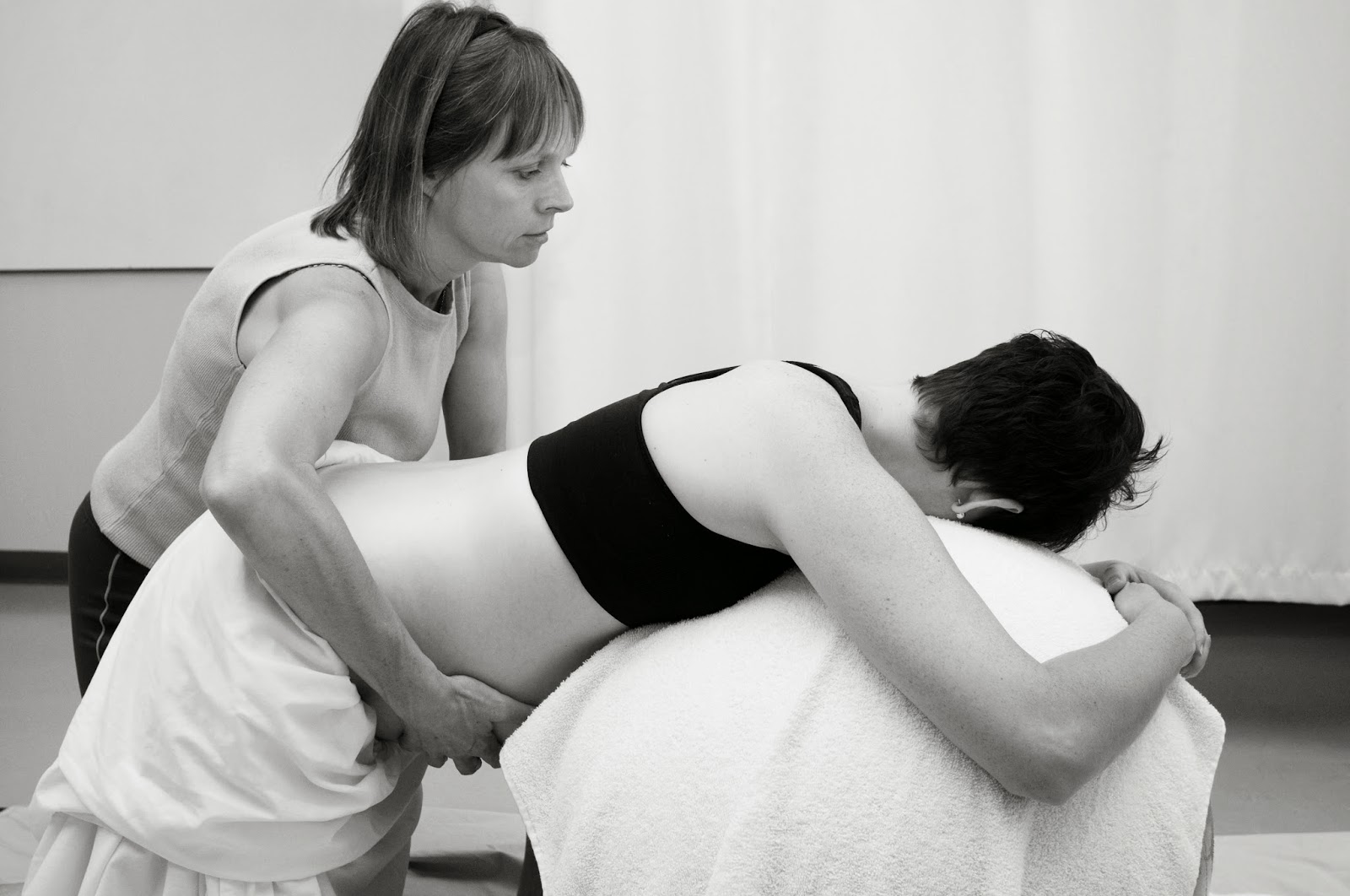
Suzanne Yates on Shiatsu for pregnancy and for babies

Suzanne Yates, is a shiatsu and massage practitioner specialising in maternity work. She regularly teaches maternity courses for therapists world-wide and has just returned from teaching in Rome.  If you would like to see a therapist trained in the Well Mother approach then you can go to the Well Mother register. 

Suzanne has written many books, including 'Beautiful Birth' which is available to buy from Born.

How can receiving shiatsu and massage in pregnancy support your baby’s development as well as supporting your own posture and well being

Much has been written about the benefits of touch in supporting pregnancy by promoting relaxation, connecting with your body and baby and easing  the “complaints of pregnancy” such as back ache, nausea and preparing for birth.


Supporting awareness of different positions in pregnancy

However I want to focus on another benefit of shiatsu and massage:  supporting awareness of the different positions in which you work and rest.  Having a range of different positions can help you feel more comfortable and enjoy your pregnancy more, but it’s also good for your baby’s development.

Pregnancy positioning myths

I have found over the last 25 years , despite the increase in awareness of massage and yoga, that not only are women, and men, moving less, but also there seems to be a lack of knowledge, or even fear, about positions that one should rest or exercise in while pregnant.  A common myth is that the left side lying position should always be favoured over the right, and in some extreme views, that the right side position should be avoided as much as possible. Another myth is that for all women lying supine after the first trimester is dangerous. While it is true that left lying may be more comfortable for some women than right lying, and some women can’t lie supine without feeling dizzy or uncomfortable, this is not the case for all women.


Learning to listen to and trust your body

So in my work, both in teaching therapists and working with mothers, I emphasise the importance of spending time supporting the mother to start trusting her own feelings about her body. I want a pregnant woman to feel able to listen to her own body, rather than forcing herself to stay in uncomfortable positions because she thinks they will be better for her and her baby. When a pregnant mother first comes for a treatment,  I spend time working out which positions are comfortable for her,  not only during the treatments, but also with ideas of how to sleep and rest comfortably, as well as looking at how she sits at a desk and how she moves. It is important to find the right kind of supportive cushions and to offer as many different options as possible. This can include, supine where appropriate, semi reclining, side, sitting, forward leaning.


Positions and movements in Labour

Listening to your body in this way will also help prepare you for labour and be able to find positions which you will find comfortable then.  It will also help you get prepared for exploring appropriate positions for feeding, carrying and exercising with your baby after birth. I want women to appreciate that what is comfortable is different for every woman and also varies from day to day.  Nothing is fixed!

Benefits of all fours


It is helpful to include some massage or shiatsu with the woman in the all fours position: this is not only excellent for alleviating lower back ache and helping the baby rotate more towards the anterior position, but also helps prepare the mother for labour and helps her have a different awareness of her pelvis.


How are we blocking our pelvises?

Due to the increased time spent sitting at computers and driving cars, a lot of pressure builds up in the pelvis. This may cause back ache, especially with the increased weight of the baby during pregnancy. It also has the effect of making the muscles in the pelvis become lazy, potentially leading to pelvic girdle instability. This is why it is important to offer options of other positions and movements which can be included in day to day activities, not simply attending classes.  However, this lack of movement also affects babies. A lot has been written about how this has led to an increase in posteriorly positioned babies, and babies getting stuck during labour. However, I am increasingly concerned about how this affects the development of the baby. Babies develop through movement and ideally the womb should provide a rich environment as the mother moves around and adopts different positions. As the mother moves less, so also the baby moves less. So during my work I emphasise the importance for women to be aware of how their baby changes position as they shift in the different positions during the treatments.

Postnatal positions for mother and baby

I find that this increased awareness of the baby helps the mother be aware of the importance for the baby to move postnatally. It is great that carrying babies is becoming more popular these days. However it is important for the mother to think about how she is carrying her baby and to vary the positions. A lot of women come to me and therapists trained with me, with hip and shoulder and carpal tunnel problems caused by carrying their baby on one hip.  This will also affect the babies left/right side development. It is important that a baby gets a full range of stimulation by being carried on both sides as well as on the mother’s (or father’s) front and back. You can see a wide selection of good carriers in Born's Carriers section.

Putting babies on their tummies

Another of my concerns with lack of movement for the baby after they are born is how little parents place their baby on their tummy. Due to concerns over Sudden Infant Death Syndrome, parents are encouraged to put their babies on their backs to sleep. However many parents become afraid of putting their baby on their tummy when they are awake. I see many babies who are rarely, if ever, put on their tummy. This leads to them developing flat heads and also less muscle tone in their backs. They tend to start crawling later than babies regularly put on their tummies and sometimes do not crawl at all. This has a long term implication for their future physical and even brain development as brains develop through movement. I make sure that I include this awareness when I teach mothers infant shiatsu and massage.

It’s amazing, isn’t it, how such a simple thing as being aware of your posture, has such profound implications; both for mother and baby.

This is a guest Blog by  Suzanne Yates of Wellmother.org

Sunday, 28 April 2013

Birth Trust Conference featuring Ina May Gaskin & Dr Yehudi Gordon

Holistic Birth Trust

Join us for the screening and discussion of the Holistic Birth Trust Conference on May 23rd a 7pm in Bristol.

Several years ago now, a small group of pregnancy and birth practitioners and educators gathered together to form The Holistic Birth Trust Foundation. The focus of the organisation was to promote the potential offered by the parent and child relationship within the arena of birth. A training programme was developed for antenatal teachers, which also in time incorporated doula training. These programmes trained many child birth educators and doulas over many years. The Holistic Birth Trust Foundation has since closed and been incorporated into two other organisations. Those being: ‘Relaxed Birth and Parenting’ formed by Dominique Sakoilsky and Louise Bennett and ‘Welcome World’ owned by Amanda Rayment. Both these organisations jointly run an Antenatal Teachers Training course together called ‘Bringing Antenatal Teaching Home’.

One of The Holistic Birth Trusts projects was to organise a conference in Bristol for childbirth educators, midwives, doulas and practitioners. The conference was given the title ‘Is it possible for the medical and holistic models of birth to join?’ At the time this was a very thought provoking question as the appearance was the two models were functioning separately a lot of the time. Also it was clear to a lot of people that if dialogue could be encouraged there would be many benefits for practitioners in all roles, within both models and of course for parents and babies. As always the resistance seemed to be how could this occur?

Our question that was asked several years ago feels equally as relevant today. So maybe this could be a good opportunity to review the first question “Is it possible for the holistic and medicals models of birth to join?” and then we may discover a deepening into this question.

The stars of the movie are the shining light in midwifery; Ina May Gaskin, who has inspired and led the way for so many of us who work in this wonderful arena of pregnancy and birth. With the obstetrician Dr Yehudi Gordon who is the founder of the UKs first models of integrated care within birthing units. Accompanying these speakers are Dominique and Amanda from the Holistic Birth Trust Foundation. There are local guest panellists who you may know: Louise Bennett, Suzanne Yates and Bristol’s first independent midwife Sue learner.

In a joint venture with Eva from Born we are offering a film viewing and discussion evening. If you work in this arena or are interested in training to become an antenatal teacher or doula this film is an inspiring and engaging documentary.

We hope to see you at the film, please click here for ticket information.

~ Love Amanda


Friday, 26 April 2013

Christy Turlington Burns Designer Ergobaby Carrier


Ergobaby has partnered with Every Mother Counts, the organisation founded by former 'supermodel' Christie  Turlington Burns. Christie is a mother of two and wife of Actor and Director Ed Burns, she founded Every Mother Counts "To help raise awareness about the global tragedy of maternal mortality, hundreds of thousands of women continue to die needlessly each year due to complications in pregnancy and childbirth but the truth is that we can prevent up to 90% of those deaths. Through partnerships like this one with Ergobaby we will be able to heighten awareness for maternal health and hopefully inspire millions of people to take action on this issue."

Every day 1,000 worldwide women lose their lives due to complications caused by pregnancy or childbirth, leaving thousands of children having never met their mothers and older siblings motherless.  Although reproductive health issues are the leading cause of death worldwide among women aged 14 to 44 years, experts estimate that 90% of these deaths are preventable. This is not a developing world phenomenon, this happens in the UK too.

Ergobaby designer series for Every Mother Counts

The range consists of 2 designer carriers and bags. Not all will be available in the UK.

At Born we work with ante-natal teachers and childbirth educators who are creating a shift in maternity care. Sometimes a woman's whole experience can be altered by a bit of knowledge she learnt in an ante-natal class or from a practitioner that she would not have heard had she not made the decision to go to that particular class or talk. When you have the information it is then possible to make informed choices about the care you want during labour and postnatally.  I believe we have personal responbility for our own and our families health. Pregnancy and birth is a time when this is more evident then at any other time in your life. Should you need a contact for a Practitioner or class we would be more than happy to share our contacts of trusted people with you. Please feel free to email us.

Monday, 22 April 2013

Visit to Cossham Birth Centre in Bristol

Birth Centre BristolIt’s amazing what people can achieve when they put their mind to it and take action. Independent Midwife Sue Learner had a vision in 2001 to transform birth in Bristol. Read the journey of Birth Centre Bristol here.   Back then the birth rate was around 10,000 per year, now it’s more like 12,000, so never has the need for stand alone midwifery units been more necessary. In 2005 BCB was joined by Pip A’Ness who took on the role of making the Birth Centres a reality.

Baby Crib


I was blown away at how wonderful the suites were, more like 4 star hotels than hospital rooms.  Each room has a large birthing pool, so mum can have their partner in there too, an ensuite toilet and shower room (no need for a bath as there is the pool), double bed for relaxing on before and after baby comes, and cute (non plastic!) crib for the baby. Pip and Lead midwife Gina have kept an eye on all the details, giving the room a wonderful homely, low tech feel. I felt relaxed just being in the room as the ambience instils it.


Pool, birthing stool and ball


Lead midwife Gina Augarde was an inspiration to listen to. A real antidote to all the NHS doom and gloom stories we hear about in the media, not to mention the TV programmes that are on mainstream TV at the moment that only perpetuate the ‘women need to be helped to give birth’ myth.  She is incredibly experienced having come from an established midwifery led stand-alone birth unit in Yorkshire and shared her vision for Bristol; to have all low risk women give birth in stand alone midwifery units leaving the ‘problem’ cases to the Hospitals where the Obstetrician’s who thrive on that kind of work reside. This makes perfect financial and common sense.  If we encourage all low risk women to birth at home or in stand alone birth centres, NHS resources in large hospital maternity units will be freed up to deal with those women who need that specialist care. I’ve spoke to a few disheartened local hospital midwives who know the kind of care they should be giving to women but are not able to offer it due to a lack of  time and facilities. With more birth centres resources this will free up Southmead and St. Micheals to do what they do best for the women and babies that need that level of care.

It was music to my ears to hear Gina say that they were trained to deliver undiagnosed breech babies, should they be presented with one during labour,  and that mums could deliver from 37 weeks to term plus 12 days. Plus all midwives have been trained in aromatherapy massage and the use of specific oils to relax or to stimulate depending on what is needed. How refreshing to hear that rather than the ‘we’ll break your waters to get you going’ line on ‘One born every minute’.

Birthing pool

The midwives we met were beaming, obviously in love with their jobs, or it might just be because they have been regularly dosed in oxytocin, the love hormone, that they regularly come into contact with when around newborn babies and their loved up parents.

As well as being the epitome of care for birthing, the centre also offers ante-natal classes and past birth de-briefing sessions with Gina.  A traumatic birth  (as defined by the woman) can leave them feeling off kilter and by talking through thier notes with a midwife can allow them to move on and come to terms with why things happened the way they did, so that they can go on to have a future empowering birth experience.  This service is available to anyone and is free.

To have your baby at Cossham, ask your midwife. As long as you live close enough to get there you can request the centre.  Or you can phone them direct  on 0117 340 5249

http://www.nbt.nhs.uk/cosshambirthcentre

Read some of the lovely reviews from families who used Cossham

https://www.facebook.com/birthcentrebristol

To find out more about Birth centres in Bristol see http://www.birthcentrebristol.org.uk

~ Eva

Sunday, 14 April 2013

The Power of Hypnobirthing

Michelle and RichardKatrina Berry has been running Hypnobirthing classes at our Stoke Newington store for some years now.  You can find out when her classes are by looking at our events section.

You may have read in the press the story of a mother who gave birth in a hotel when she opted to check in there, rather than go home because she was told she wasn't in established labour. This is the original article first published in the Camden Journal.

Mum Michelle Booth and partner Richard attended Katrina's Classes at our Stoke Newington Store and her story of the birth is a wonderful read and testimony to the  amazing benefits of Hypnobirthing. Not just for the birth but for bonding, breastfeeding and general empowerment that it's obvious the couple got from the classs.

Katrina is also a Doula and can be contacted via her website.

~Eva


Friday, 22 March 2013

Top Tips to Prepare for Breastfeeding


Just as you would prepare for birth, there are things that you can do to prepare for a smooth breastfeeding journey.

Relax. Listen to some relaxation recordings before the birth; this will also help with labour, and will help you when you have your baby as well. Listen to our free Hypnosis for Childbirth recordings from Tracy Holloway, from our site.

Relaxed Birth and Parenting also have a lovely CD, Arrival,  to help you relax and connect with your baby.

Consider a relaxing massage or Shiatsu (Acupressure) from a practitioner specially trained to work with pregnancy and post-natally.  Most practitioners on the Well Mother Register offer home visits for the first month, something I found really useful because I knew my baby was close by. They can also teach self massage of the breast, a useful thing to know to help prevent milk duct blockages.

Trust. Trust your body, trust your baby - when the two are put together frequently, comfortably and effectively, breastfeeding happens. Any form of bodywork, like yoga, Shiatsu, massage, meditation will support you to trust in your body and give you the mental space to just 'Be' with your baby.

Learn. Attend a class with a Lactation consultant or breastfeeding counsellor before your baby arrives. Breastfeeding is a new skill to learn, and because we don't see it in our culture every day, it is worth investing is a training session with your partner too. Supported mum = happy baby. Relaxed Birth and Parenting offer wonderfull weekly mother-to-be classes and couples workshops to help you prepare for your baby's arrival.

Buy a copy of 'The Womanly Art of Breastfeeding',  'Ina May's Guide to Breastfeeding' or 'The Food of Love'

Understand.  Your breasts will change when your baby is born; if you know what to expect, you won't be caught off-guard. See the PDF and videos on our  Bravado Designs page whose nursing bras we sell.

Nurture yourself. Buy a comfortable nursing bra. I've yet to find a range that beats Bravado. Get measured around the 36th week of pregnancy.

Drink pregnancy well-being tea and have a packet of Mama's Nursing Support Tea in your cupboard. It's not just that these teas contains fantastic vitamins and minerals, the very act of making loose leaf tea will help you to relax, and drinking it will calm you. Think of it as your 'calm down for feeding' ritual, where nothing else matters but giving your body and your baby some TLC. Amanda, the Herbalist from Welcome World who makes these teas, also makes a tincture that may help to boost milk production.

Find Breastfeeding Buddies. Speak to other mums who have breastfeed. Find out if there is a breastfeeding support group close to you that you can go to before your baby comes so you can meet other breastfeeding mums. These groups LOVE having pregnant mums visit.

Attend a Baby Calm or Relaxed Birth and Parenting ante-natal class where you can  meet other mums to be to share your journey

Make it comfortable. Try a good nursing support pillow, if it works for you, buy it, it will end up having lots of other support uses too! In the first few days of breastfeeding, getting the positioning correct is important to prevent baby latching oncorrectly. Sitting upright and with your feet and back supported makes this easier.  After you have mastered the art of getting your baby attached, you may not need it, but for those first few days or weeks it may be your best friend.

Buy a tube of Gold Cream, you may never need it but having it there just in case will give you peace of mind.

Keep help at hand. Know where to get help if things don't feel right, or go wrong. There is a lot of support out there. Better to ask a silly question than suffer in silence. Visit www.lcgb.org for skilled local help, keep your local contacts handy so if you need to contact them you can do that straight away. Pain and/or slow weight gain is an indicator that attachment needs experienced and speedy attention.

Set yourself up for success. Read about how to  have a 'Baby Moon', and why it's important to keep unnecessary people away during this special bonding time.

Your baby will need to feed at night, and it's recommend by Unicef/Baby Friendly that baby is in your room for at least the first 6 months. This can be in your bed or in a crib, cradle. cot or Moses basket next to your bed.

Find an Osteopath or Chiropractor you can take your baby to after birth for a check over. Regardless of what kind of birth you have, it's a good idea to do this to make sure there are no issues that could impede good attachment or can cause discomfort to baby or you. We are happy to give you names of trusted practitioners, or see Born Together.

Read positive articles about breastfeeding, read websites that support breastfeeding mums such as www.normalfed.com.

Print these Positive affirmations for breastfeeding and read them every day in the last month of pregnancy, and after your baby arrives:Breastfeeding affirmations

~Eva, with help from April, Amanda, Becky, Dominique, Juliana, and Suzanne

Friday, 15 February 2013

Abdominal-Sacral Massage - by Natalie McGrorty

absac web1

The abdomen is a part of the body that many of us pay little attention to, unless we experience pain and discomfort in this area or are not happy with its appearance. However, the abdomen contains many of our vital organs and in women, the reproductive organs too. Therefore, health of the abdomen contributes greatly to wellbeing.

Many women experience intense pain and heavy bleeding before and during menstruation but believe that this is  ‘normal’ and something that they must endure. However, symptoms such as PMS, cramps, clotting and irregular cycles are in fact signs of imbalance and in many cases result from misalignment of the abdominal organs. This is also true for many digestive disorders.  Due to the close proximity of the abdominal organs and tissues, which share common neural pathways, improper alignment of any of the organs can result in stagnation and congestion elsewhere. Digestion, fertility and immunity are closely linked.

Thursday, 7 February 2013

What does a Doula do? by Catherine Waters, Relaxed Birth & ParentingDoula

At each birth I attend, I'm reminded of this quote;

“It is by logic that we prove, but by intuition that we discover.” Henri Poincaré

I first heard the term Doula when I was newly pregnant with my third child. I did some research, and was struck by what a good idea it seemed, 'to mother the mother'.

I went on to have my third baby at home, a beautifully simple birth.

Monday, 3 December 2012

Drinking Herbal Teas During Pregnancy by Amanda Rayment

Welcome World Pregnany Joy Tea

The  grandmother of herbalists today, Juliette de Bairacli Levy, is often quoted as saying  “Motherhood. What maturity there is in that word; all those “Os”.  I couldn’t agree with her more! For most women stepping into such maturity, be that with our first child or our 4th   we welcome some assistance along the way. All the nurturing and nourishment we offer the child in our womb can be the opportunity to welcome and receive nurturing and nourishment for us as well. A lot of us find it easier to give to others rather than receive, in truth they are the same. Mothering is a wondrous opportunity to teach our selves that in the giving we receive. How great is that thought!

Herbs have a long tradition of supporting women in pregnancy whether attending to minor discomforts, affirming wellbeing or healing diagnosed symptoms. A cup of herbal tea can offer a pregnant woman such gifts in terms of nourishment, sustaining well being and lifting the spirits. At Welcome World Herbal Teas we draw on this traditional knowledge and my herbal training. But most of all it is the experience of working with so many pregnant women in my private herbal practice. The herbs used in our formulas are all friendly, familiar herbs which have grown in many back yards in Europe and North America for generations. I like to call them friendly, family kitchen cupboard herbs. The herbs I am going to share with you are all in the Pregnancy Joy tea this is one of our most popular formulas. All four of these herbs could be called mild, gentle, tonic herbs, nurturing and nourishing plants and yet what I have learnt in using and prescribing these herbs is that there is also a rock like strength and sustained nourishment.

As a herbalist I have the good fortune to assist pregnant women through my herbal practice, so which herbs go into Welcome Worlds Pregnancy Joy Tea and why? Let’s start with Nettle leaf. A herb that nourishes in so many different ways, such a beautiful no nonsense plant. Strength is offered in every cup of nettle tea. I would describe nettle as getting the job done. So whenever there is job to be done, extra strength needed or a change of direction in our life, nettle certainly assists us to be less fragile and has a very building and sustaining quality. It is also a great every day herb to brew up as a cuppa assisting us to be full of energy throughout the day. Nettle is often described as a uterine tonic herb. So as you can hear nettle would always be in any pregnancy tea I choose to formulate. Each cup packed with vitamins and minerals.

The next herb I am going to speak of is Oat Straw, this is one of my favourite and most used herbs as a single use herb. Oatstraw is also a very friendly herb and will fit beautifully in to any tea formula. To me oat straw oozes life force energy of saying 'yes' to life. But what it whispers to me more than anything is reminding me to be kind to be tender with myself and of course others. This herb feeds and nourishes the nervous system of which is so needed in pregnancy where most of us are meeting change in our life with the discovery of pregnancy. It has a normalizing effect on the whole physiology of the body when under any level of stress. Oatstraw is known to support conception and nourishes and soothes pregnancy. If these effects are not blessings enough there is more this great plant gives to us freely. Praises are sung regularly for oats ability to support the heart and increase energy levels; can you hear what I mean when I say "... it oozes life force energy?" I believe as we support the nervous system and encourage the body to rest back our immune systems are enhanced. All of which supports the joy of pregnancy. Again a herb rich in vitamins and minerals.

Lemon Balm, this is a herb I enjoy and can be added to most pregnancy cuppas. Lemon Balm supports the nervous system and the digestive system at the same time. As pregnancy moves through the trimesters there is a feeling of less space understandably for the mother and baby. This can be perceived in many different ways. Sometimes digestive systems issues arise as a result of less space and this is where lemon balm offers assistance. This herb is great to combine with nettle if you do not want to use an allopathic remedy while you are pregnant. Lemon balm is known for lifting our spirits and adds a delightful taste to any tea formula. Again relax into the joy of pregnancy.

So the last plant I am going to speak of in the Pregnancy Joy Tea but certainly not the least is Alfalfa. Wow! this herb pushes its roots so far down into the earth and draws up all the goodness the earth has to offer. Alfalfa is so rich in vitamins and minerals especially vitamin k. I would use it as a herb on its own for assisting with a programme to lower cholesterol and also have used it successfully when extra weight or growth is needed. In pregnancy I use alfalfa as part of a formula tea to enhance general wellbeing. This plant is full of vitality and of course can be eaten sprouted as well as in herbal tea.

In the last trimester of pregnancy I suggest bringing raspberry leaf into your kitchen cupboard. This herb I call a woman’s best friend. Raspberry leaf has supported and restored generations of women’s uteruses. A good tonic herb that supports women in preparing for birth, widely known as women’s birthing ally. Herbalist also call raspberry leaf an astringent herb as it assists in lessening the flow of discharge.  Raspberry leaf is often defined as a strengthening, tonic and supportive herb. Carry on having raspberry leaf in the kitchen cupboard after your baby is born; it’s a great family herb that can be combined with nettle very easily for most family ailments and well being. Raspberry leaf provides very easily assimilated calcium and iron for all the family. Only drink in the last trimester of pregnancy. Also make a large pot or flask to sip in early labour. Midwives and doulas enjoy a brew of Raspberry leaf as well not forgetting partners of course.

I hope this has encouraged you to believe that herbal teas are not only of benefit and an alternative to caffeine drinks during pregnancy but also are a delight and a blessing. So relax make a brew and enjoy.

Amanda Rayment is a Master herbalist and owner of Welcome World Herbal Teas.

Tuesday, 6 November 2012

Thursday, 12 April 2012

The first 7 Secrets of Birth Training with Janet Balaskas


Dominique Sakoilsky co-founder of 'Relaxed Birth and Parenting' tells us about the first '7  Secrets of Birth' Training she ran recently. This is a training for people wanting to work with women during pregnancy and postnatally and uses the '7 Words' personal development methodology applied to pregnancy and birth.


Thursday, 1 March 2012

Sue Learner Independent Midwife Bristol

Sue Learner has been a midwife for 25 years and is one of 2 Independent midwives in Bristol. As well as offering midwifery services where couples can employ her to take care of all their ante-natal checks and be at the birth, Sue also offers a consultancy service where you can have an hour of her time to talk through any issue you have with your current or past pregnancy or birth experiences.

In this interview Sue explains how these sessions can empower you to have the birth experience you want or get over a birth that did not go as planned.

Sue can be contacted on 0117 927 6131

Sue Learner Talks to Eva about her new midwifery consultancy

Friday, 25 November 2011

Home birth and the Press

Today the National Perinatal Epidemiology Unit released the results of a cohort study between April 2008 and April 2010,  looking at care in labour, delivery and birth outcomes for the mother and baby for 64,000 'low risk' births in England.

It covered 97% of NHS Trusts providing home birth services and nearly 90% of midwifery units took part.

What I find so interesting is how robust academic data can be interrupted in such different ways by our various British newspapers and media.  So while many of the broadsheets offer a balanced and fair coverage some of the tabloids (and those with the highest circulations) choose to focus entirely on picking out and sensationalizing any statistic that potentially generates shock and fear among their readers.

Saturday, 21 May 2011

How many home births in your area?

Born has always had an active interest in birthing issues and supporting parents to exercise their choice - we've two children, one born at home and the other in hospital.  So we were fascinated by a recent US study entitled ‘Birth: Issues in Perinatal Care’ that announced that the percentage of births occurring at home in the US increased by 20% between 2004 and 2008.